
Packaging field notes
Clearer decisions before custom packaging reaches production.
These guides explain the decisions that shape a custom pack: structure, material behaviour, finish, protection, quantity and approval. They are designed to help brand, procurement and operations teams prepare useful inputs before technical validation and partner selection begin.
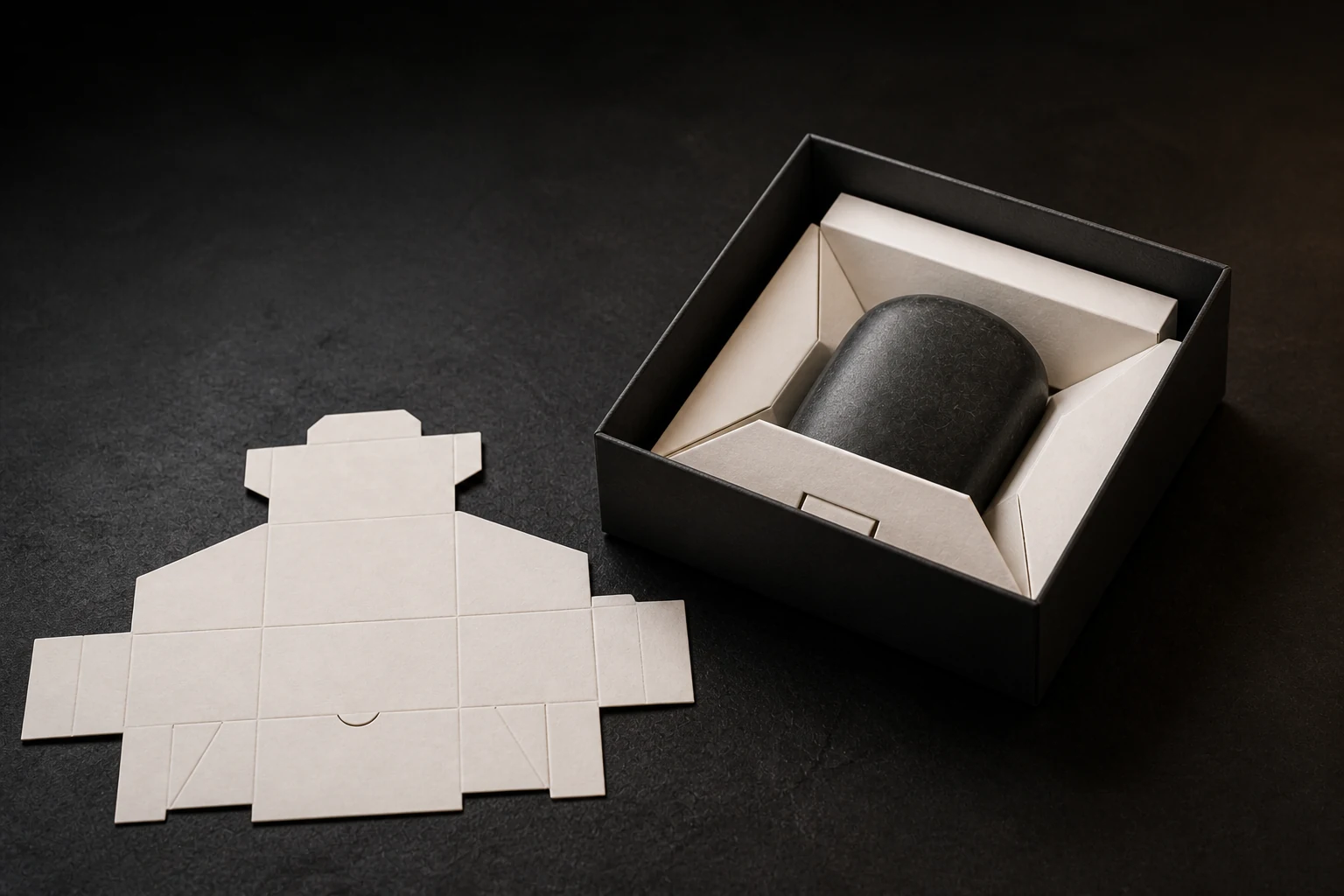
Illustrative direction study — not client work, production proof or performance evidence.
Custom rigid boxes
Understand common constructions, inserts, opening styles and the information needed to evaluate whether a rigid box suits the product.
Read the rigid box guideMaterials and finishes
Separate the structural substrate from the visible wrap and choose finishes for a reason, not from a disconnected sample list.
Explore materials and finishesThe custom packaging brief
Collect the product, channel, quantity, destination and brand inputs that make technical discussion more focused and comparable.
Build a stronger briefStart with the decision the pack must support
A premium appearance is an outcome, not a specification. Begin with the practical job of the pack: protect a fragile object, organise a set, improve shelf recognition, support gifting or simplify fulfilment. That decision narrows the useful structures and prevents decorative choices from working against handling, cost or product protection.
Define first
- Product and intended sales channel
- Primary protection or presentation need
- Who opens, stores and disposes of the pack
- What the current packaging does poorly
Treat structure, material and finish as separate layers
The same visual direction can behave very differently on a folding carton, a wrapped rigid box or a corrugated shipper. Structural board, visible paper, insert and surface treatment should be discussed separately, then recombined as a coherent system. This makes trade-offs legible and keeps comparisons between proposals meaningful.
Review as a system
- Outer structure and opening method
- Visible surface and colour response
- Insert, retention and product contact
- Print and finishing processes

Validate before commercial commitment
A reference image can communicate mood, but it cannot confirm dimensions, tolerances, print behaviour or production feasibility. Those points require drawings, material references and, where appropriate, a sample or prototype. Quantity, price, minimum order and timing remain project-specific until the relevant inputs and production route are checked.
Evidence to request
- Dimensioned dieline or construction drawing
- Named material and finish references
- Approval sample appropriate to the risk
- Written scope, assumptions and exclusions
Use each guide at a different moment
Read the rigid box guide when choosing a construction, the materials guide when refining the visual and tactile language, and the brief guide before asking for a technical evaluation. Together they create a shared vocabulary without pretending that an online article can replace project-specific engineering or supplier documentation.
A practical sequence
- Frame the project with the brief guide
- Shortlist the structural family
- Align materials and finishes with the concept
- Validate the combined specification
Packaging field notes
Questions before you begin
No. They help teams prepare decisions and inputs. A production specification still needs project-specific dimensions, materials, artwork, tolerances, approval criteria and supplier validation.
Bring the product and the constraints into the conversation.
Share the information you already have. We can identify what is clear, what still needs validation and which next step is proportionate to the project.
Discuss your packaging brief