

Guide · Material language
Packaging materials: specify the layer before the effect.
“Premium paper”, “soft touch” and “eco material” are not complete specifications. Useful material decisions name the structural layer, visible surface, print process, finish and evidence required for the intended product and distribution route.
Illustrative direction study — not client work, production proof or performance evidence.
Read the pack as a system of layers
A pack can combine a structural substrate, a printed or wrapped surface, an insert, an adhesive and one or more decorative or protective finishes. Each layer performs a different job. Naming them separately makes it easier to understand where colour comes from, what carries the load and which component affects recyclability, rub resistance or product contact.
Name each layer
- Structural board or corrugated substrate
- Outer and inner visible surface
- Insert and retention components
- Ink, coating, foil, film and adhesive
Choose paper and board by behaviour, not only appearance
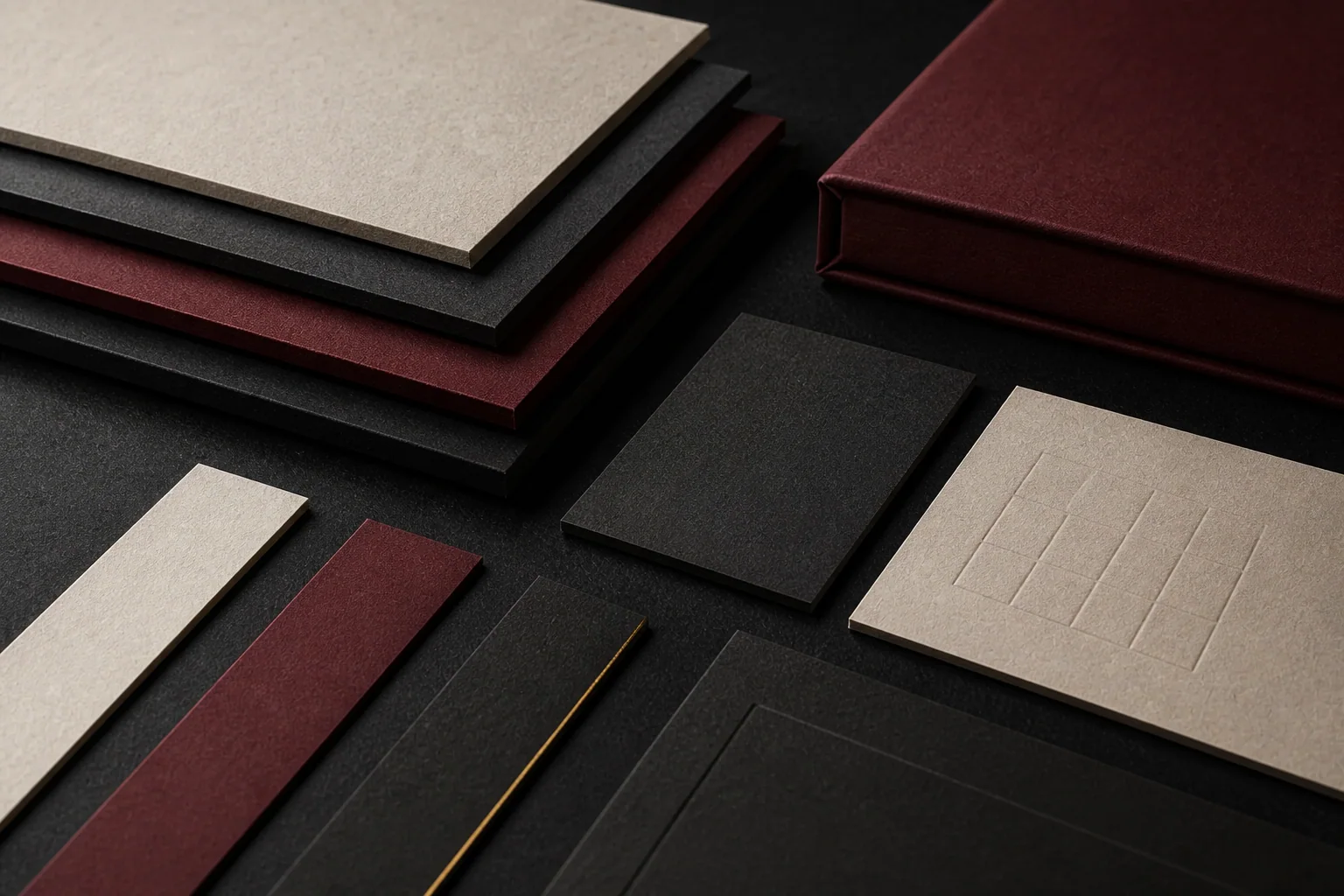
Coated papers can support crisp reproduction and dense printed colour; uncoated or textured papers offer a different tactile and optical response. Dyed-through papers may reduce the contrast of exposed edges, while pale or dark stocks can change ink and foil results. Board thickness alone does not describe stiffness, grain direction or performance after creasing and wrapping.
Ask for named samples and evaluate them in the intended construction. A loose swatch cannot show every fold, edge turn, seam or glue interaction.
Evaluate the substrate
- Shade, texture and batch tolerance
- Thickness, stiffness and grain direction
- Print, crease, fold and wrap behaviour
- Edge appearance and internal consistency
Let the insert solve a protection problem
Paperboard, corrugated board, moulded fibre and foam-based inserts provide different combinations of precision, cushioning, weight and presentation. The right choice depends on the product geometry, fragile zones, allowed movement and removal sequence. If the insert touches cosmetics, food, electronics or other sensitive products, application-specific documentation and testing may be required.
Define insert performance
- Retention during transport and presentation
- Permitted contact and sensitive surfaces
- Finger access and product removal
- Compression recovery and repeated use
- Separation and disposal at end of use
Use finishes to direct attention
Foil stamping, embossing, debossing, screen print, spot varnish and lamination each change light, touch and production complexity in a different way. One controlled finish often creates more hierarchy than several competing effects. Fine type, large solid areas, deep relief and tight registration should be reviewed against the chosen surface and process limits.
Specify the effect
- Exact artwork area and intended visual priority
- Reference colour, foil or gloss level
- Relief depth and reverse-side implications
- Registration tolerance between processes
- Handling, rub and scratch expectations
Support material claims with project-specific evidence
Terms such as recyclable, recycled, plastic-free, certified or compostable should not be used as generic decoration. Their accuracy depends on the complete pack, local collection systems, percentage and chain-of-custody documentation, adhesives, coatings and the market where the claim appears. Request current supplier evidence and have any regulated or environmental statement reviewed for the intended use.
Material availability, minimum order, price and lead time vary by specification and production partner. They should be confirmed after the construction, quantity, destination and approval route are clear.
Evidence before a claim
- Named material and supplier declaration
- Relevant certification scope and validity
- Complete-pack composition, not one component only
- Destination-market wording and disposal context
- Approved sample or reference standard
Guide · Material language
Materials and finishes questions
There is no single premium material. The strongest result is usually the material that suits the structure, product, print method and brand direction, then is executed consistently at edges, joins and touchpoints.

Turn a visual reference into a testable specification.
Share the product, structure, quantity target, destination and the surfaces you respond to. We can help clarify material options and identify the samples or documents needed before approval.
Discuss materials and finishes