

Guide · Project clarity
A packaging brief your team can actually use.
A good brief does not need to solve the packaging before the project starts. It needs to make the product, constraints, desired experience and open questions visible enough for design, technical and commercial decisions to move in the right order.
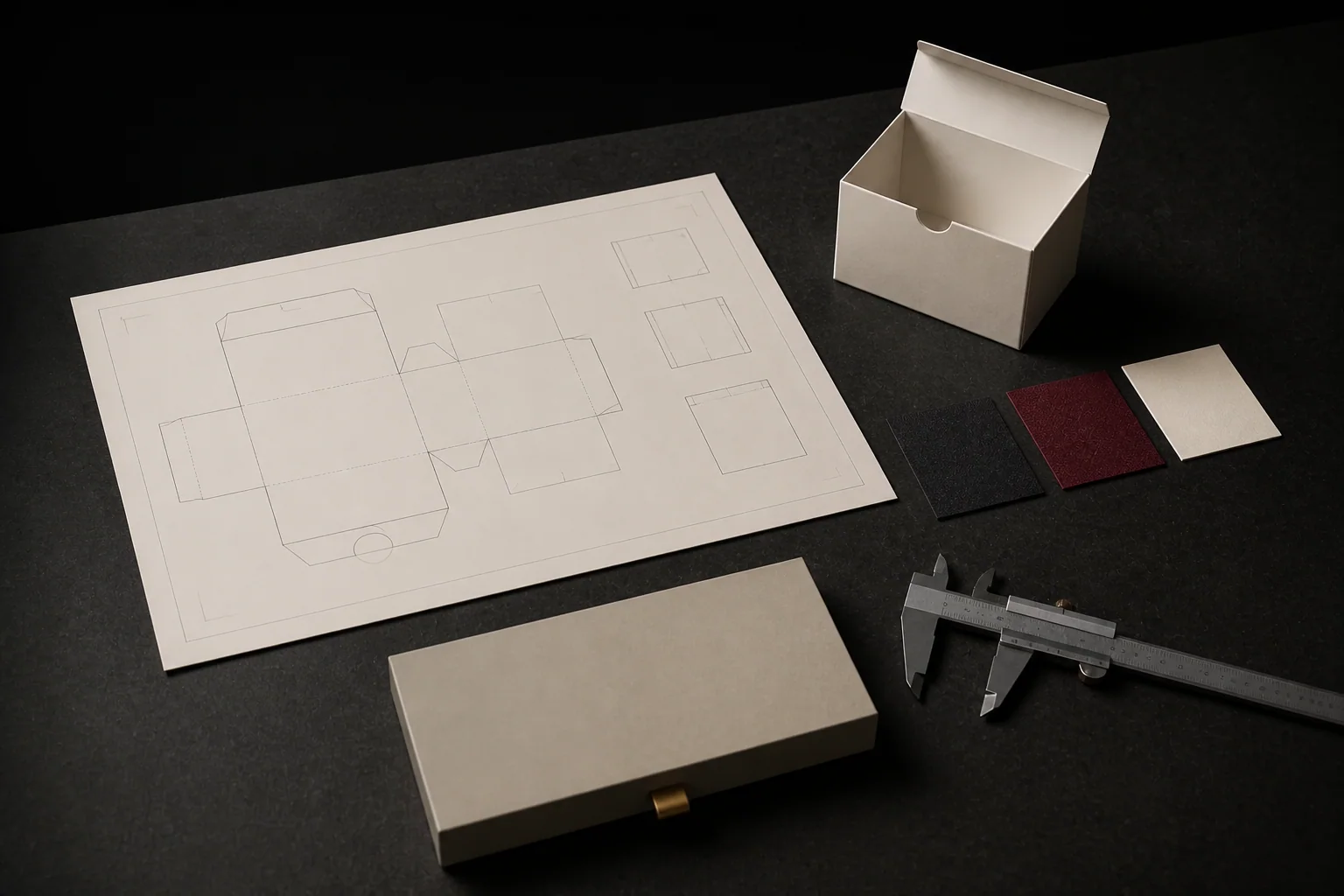
Illustrative direction study — not client work, production proof or performance evidence.
Begin with verified product facts
Record maximum dimensions, weight, orientation, fragile zones and every component that must fit in the pack. Note whether measurements come from a production unit, prototype or estimate. Photographs help, but they should not replace dimensions or physical samples when fit is critical.
Product inputs
- Length, width, height and weight
- Accessories, documents and variants
- Fragile, sharp, sensitive or moving parts
- Required orientation and permitted contact
- Available sample or technical drawing
Describe where the pack must work
A presentation box used in a store faces different risks from a pack sent through parcel networks. State the sales channel, packing location, destination markets, storage conditions and whether an outer shipper is expected. These details influence protection, labels, assembly and the realistic outer dimensions of the system.
Use context
- Retail, direct-to-consumer, wholesale or gifting
- Packing and fulfilment location
- Destination country or countries
- Storage, stacking and carrier conditions
- Outer carton and pallet assumptions
Translate brand intent into observable choices
Instead of asking only for “luxury” or “minimal”, describe what the user should notice first, how the pack should open and which existing brand cues must remain recognisable. Include current artwork, colour standards, logo rules and references with a short note explaining what is relevant in each one. A reference is direction, not permission to copy another brand.
Creative inputs
- Desired first impression and opening sequence
- Brand assets and current packaging files
- Colour, type and logo standards
- Reference images with specific observations
- Required text, labels and legal content
Make commercial boundaries visible
Provide the target quantity and distinguish a launch estimate from a repeat annual requirement. If a working budget range or required delivery window exists, share it as a constraint rather than a guarantee. Price, minimum order and timing can only be confirmed after structure, materials, finishes, destination, approval route and production partner are aligned.
Commercial inputs
- Target quantity and possible repeat frequency
- Budget range, if available
- Required date and reason behind it
- Delivery destination and transport scope
- Known procurement or payment constraints
Define who decides and what approval means
Name the people responsible for brand, product, procurement and final approval. Agree which outputs are needed: concept direction, technical drawing, white dummy, material sample, printed sample or another proof. A clear approval chain reduces contradictory feedback and creates a record of accepted changes before production coordination.
BlackSea LOGI can help organise the brief, develop direction, clarify technical questions and coordinate sampling or specialist partners where included. The exact scope should be written for each project.
Approval map
- Decision owner and feedback contributors
- Required concept and technical deliverables
- Sample level appropriate to the risk
- Artwork owner and final file responsibility
- Written acceptance criteria and change log
Guide · Project clarity
Packaging brief questions
Yes. A useful starting brief can contain product facts, constraints, brand assets and references. Open design questions should be labelled as decisions to make rather than filled with assumptions.

Share the brief you have — including the unknowns.
We will review the product, scope and constraints, then identify the decisions and evidence needed for a proportionate next step.
Send your packaging brief