

Guide · Structure
Custom rigid boxes: construction before decoration.
A rigid box can create a deliberate, durable presentation, but weight and visual presence alone do not make it the right solution. The construction must match the product, opening sequence, distribution route and expected quantity before materials and finishes are refined.
Illustrative direction study — not client work, production proof or performance evidence.
What a rigid box is — and when it is useful
A rigid box is typically built from dense board that is cut, assembled and wrapped with a separate visible material. Unlike a folding carton, it normally reaches the user already formed. This makes it suitable for considered presentation, repeated opening or heavier products, but it also affects storage, transport volume and assembly economics.
It is worth evaluating when the pack is part of the product experience and when its added material and logistics footprint are justified. For some projects, a well-engineered folding carton or corrugated solution will be more appropriate.
Check the fit
- Product weight, fragility and centre of gravity
- Retail, gifting, e-commerce or presentation use
- Expected handling and storage after opening
- Distribution volume and shipping configuration
Choose an opening and construction family
Lid-and-base, drawer, book-style and shoulder or neck constructions each create a different opening rhythm and require different tolerances. A magnetic closure may be possible in some book-style formats, but closure strength, component choice and any destination-specific restrictions need technical review. The best structure is the one that makes product access intuitive while remaining repeatable in production.
Compare structures by
- Opening sequence and access to the product
- Closure method and desired reuse
- Number of components and assembly steps
- Shipping, packing and storage implications
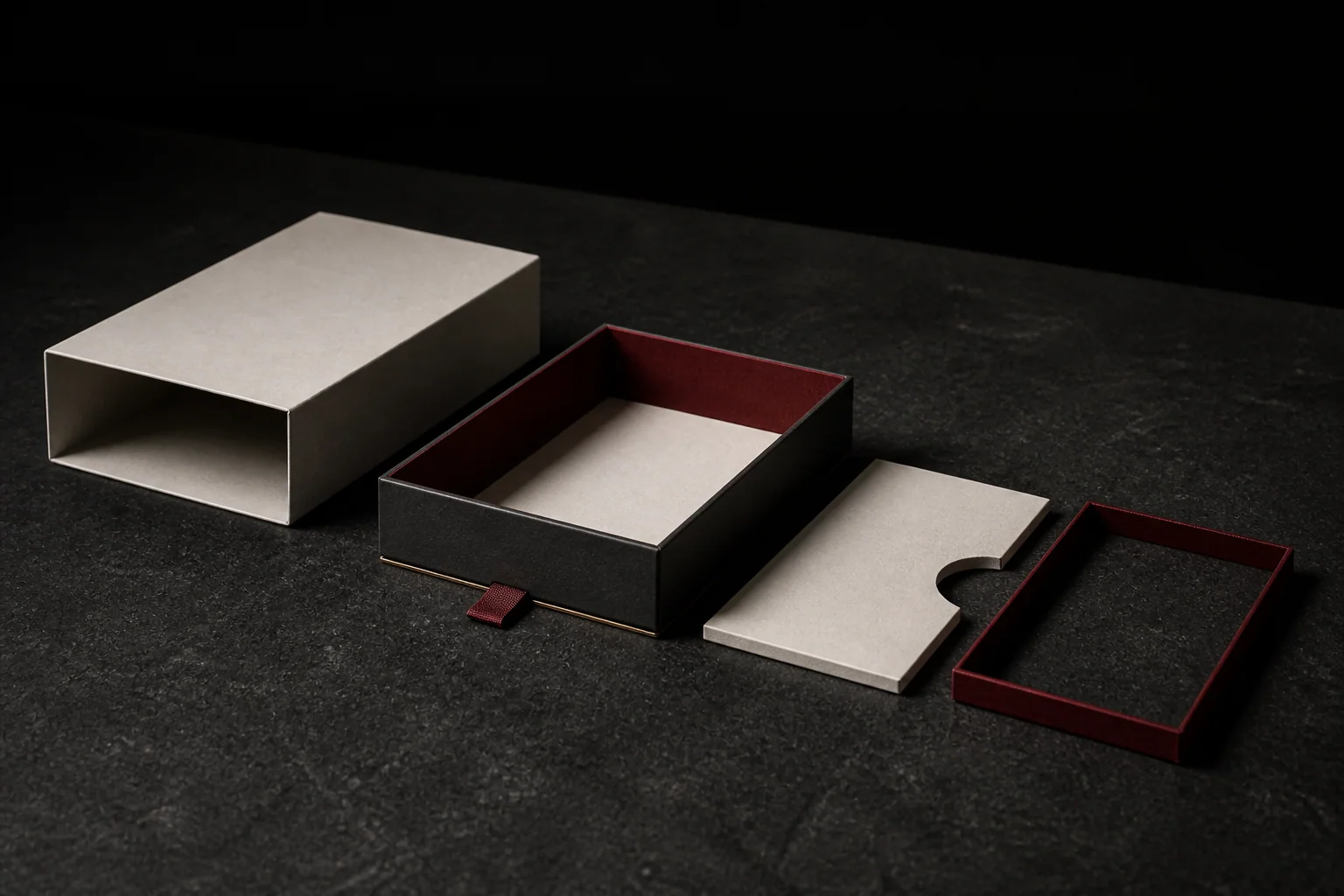
Dimension from the product outward
Reliable development starts with verified product dimensions, weight and any fragile or moving elements. Internal clearance must account for the insert, wrap thickness, manufacturing tolerances and the way the user lifts the product out. An insert is not merely a visual tray: it controls retention, impact, orientation and the first touchpoint.
Paperboard, moulded fibre and foam-based inserts behave differently and are not interchangeable. Material suitability, product contact, recovery after compression and disposal route should be assessed for the specific application.
Inputs for dimensioning
- Maximum product dimensions and verified weight
- Accessories, cables, documents or refills
- Fragile zones and permitted contact points
- Preferred removal method and finger access
- Outer case or shipping carton constraints
Build the visual language on a feasible surface
The visible wrap determines much of the colour, grain and tactile impression, while the board beneath controls form and edge behaviour. Uncoated, coated, textured and specialty papers respond differently to solid colour, foil, embossing and lamination. Edge turns, corners, seams and registration should be part of the design review rather than hidden until sampling.
Review the complete surface
- Paper reference, shade and texture
- Print method and coverage
- Foil, emboss, deboss or other finish position
- Visible edges, corners, seams and internal wrap
- Rub, scratch and handling expectations
Use sampling to close the remaining risks
A white structural dummy can verify size and opening; a material mock-up can test colour and tactility; a production-representative sample can address the final combination. The right sample level depends on novelty, quantity, finish complexity and the cost of being wrong. Approval criteria should be agreed before the sample is judged.
BlackSea LOGI can support concept direction, technical clarification and validation, then coordinate sampling and specialist production partners when included in scope. Final pricing, minimum order and timing can only be confirmed after the relevant specification and partner route are defined.
Approve deliberately
- Structure, fit and opening behaviour
- Colour reference under agreed viewing conditions
- Finish position, depth and registration
- Insert retention and product removal
- Documented changes before production approval
Guide · Structure
Rigid box questions
No. Perceived quality comes from proportion, material, detail and suitability to the product. A precise folding carton can feel more considered than an oversized or poorly resolved rigid box.

Have a product in mind for a rigid box?
Send the product dimensions, weight, quantity target, destination and any reference you are using. We will separate the design direction from the points that need technical validation.
Discuss the rigid box brief